Dead Whale Washes Ashore at Lovers Point: Photos and Marine Safety Response
 By James H. Sterling
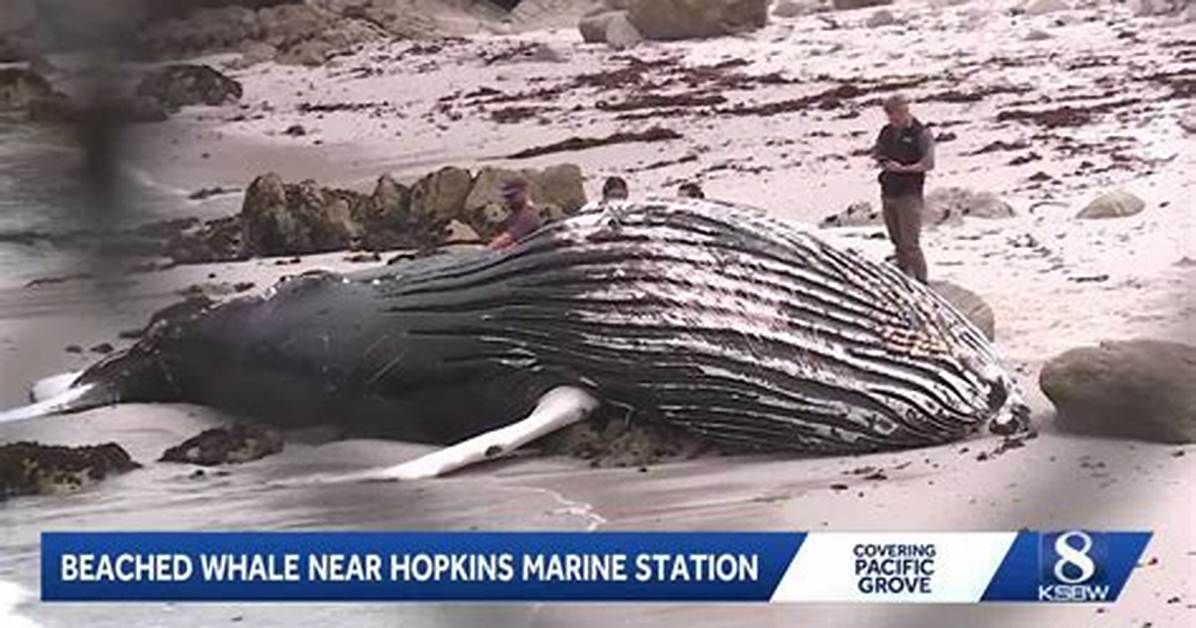
Because the juvenile humpback came to rest adjacent to Hopkins Marine Station, Stanford University’s marine biology outpost, scientists were on site within hours. Researchers from the regional marine biology response team partnered with veterinarians from The Marine Mammal Center to document the stranding. Federal law under the Marine Mammal Protection Act strictly protects all cetaceans, making it illegal for unauthorized personnel to touch, disturb, or collect parts of the carcass.
During the low tide cycle, field pathologists collected skin, blubber, and muscle biopsies to screen for underlying conditions. Necropsy teams look specifically for signs of human interaction: blunt-force trauma consistent with cargo ship strikes, or linear scars indicating entanglement in commercial fishing gear. While the results of toxicological and histopathological testing take weeks to process, baseline measurements confirmed that the whale was an immature juvenile, roughly one to two years old, likely separated from mother-calf migratory corridors.
James Sterling reports on renewable energy developments, climate policy, ecological conservation, and green tech innovations around the globe.
