Right and Left in Spanish Visualized: Foolproof Memory Hacks and Street Sign Realities
 By Maya Lin-Takahashi
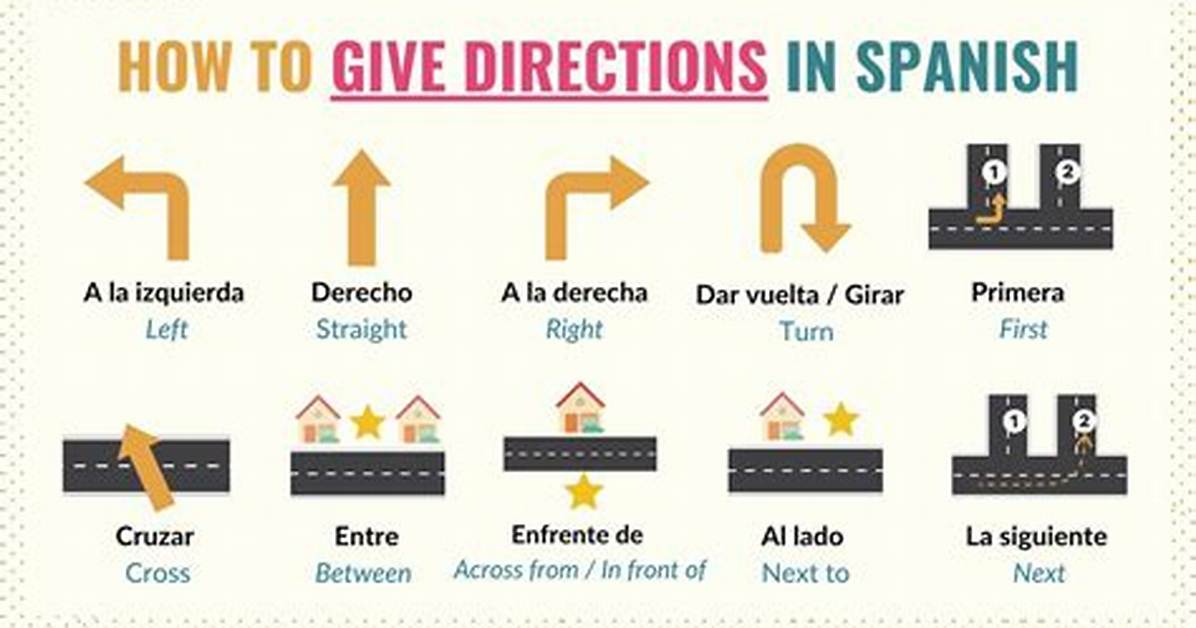
Q1: What is the fastest mental trick to avoid confusing derecha and derecho?
A1: Listen to the ending vowel. The feminine ending -a indicates a directional flank (a la derecha = to the right). The masculine ending -o signals continuous forward movement (todo derecho = straight ahead). If you are in Spain, avoid the problem entirely by saying todo recto for straight ahead.
Q2: Why do signs in Spain say "girar" while Latin American drivers say "doblar"?
A2: Both verbs denote changing direction, but regional vernacular evolved independently. Spain favors girar (literally, to pivot or gyrate), while Mexico, Colombia, and the Southern Cone traditionally use doblar (to bend or fold). Both are universally understood, but regional transit authorities print signs matching local conversational norms.
Q3: How do I pronounce "izquierda" without stumbling?
A3: Break it down into three distinct syllables: iz - quier - da. Treat the middle syllable like the English word "care" blended with a "y" sound: eez-KYEHR-dah. Do not attempt to over-roll the "r." Placing the primary vocal stress squarely on the middle syllable (-quier-) makes the entire word slide off the tongue naturally.
Q4: What should I say to a taxi driver when approaching my destination?
A4: Use proximity anchors rather than abrupt directional commands. Phrases like En la esquina, a la derecha, por favor (At the corner, to the right, please) or Bajando el puente, a mano izquierda (Coming off the bridge, on the left-hand side) give drivers enough stopping distance to merge safely.
Maya is a hardware enthusiast who tests and reviews smart home devices, smartphones, wearables, and audio gear. She focuses on practical consumer value and build quality.
