Color Theory Fact Check: Does Mixing Pink and Green Always Result in Brown?
 By David Miller
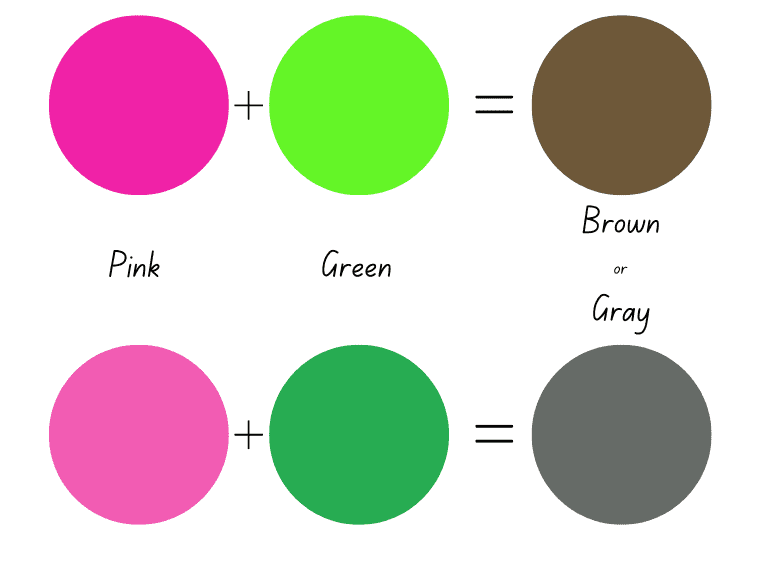
Relying on tube black (carbon black or ivory black) to darken or desaturate a vibrant color often ruins a composition. Pure black flattens paintings, deadens surrounding chromatic energy, and drains the vibrancy from biological subjects like skin, foliage, and fabric.
Professional painters use complementary balancing to lower a color's saturation naturally. If an artist finds an emerald green passage in an oil painting too sharp or artificial, introducing a drop of carbon black turns it into a dull, lifeless slate.
Introducing a pale, red-based pink instead alters the green's tint and shade balance naturally:
- The red wavelengths neutralize the overwhelming green chroma.
- The white pigment maintains luminosity across the brushstroke.
- The combined mix produces a natural shadow tone that feels organically tied to the broader lighting conditions of the scene.
This dynamic also explains why botanical illustrators rely heavily on pink-green mixtures. Stems, leaf veins, and blossom bases rarely present as raw primary greens; they carry subtle brownish-pink sheaths that only direct complementary blending can capture accurately.
David Miller brings 15 years of experience in global economics, personal finance strategy, and market dynamics. He specializes in turning complex economic trends into actionable insights for everyday readers.
