Color Theory Fact Check: Does Mixing Pink and Green Always Result in Brown?
 By David Miller
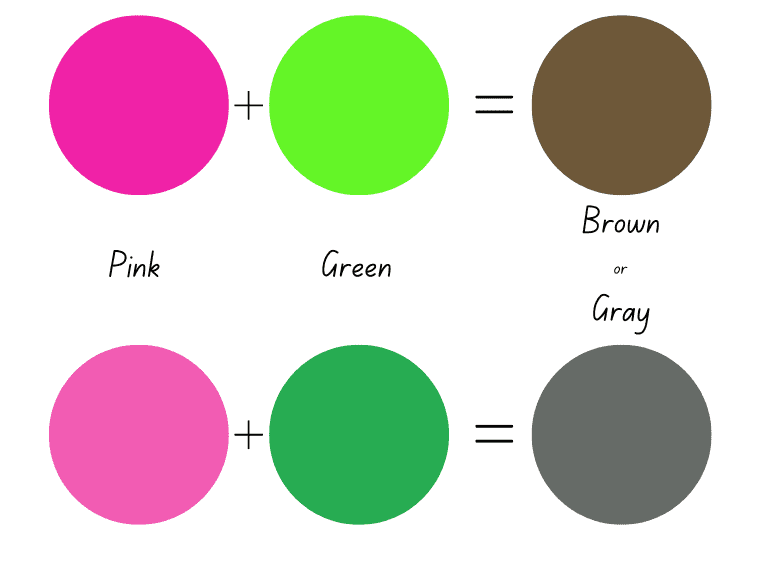
Color temperature dictates whether a physical mixture lands as a clean architectural neutral or a muddied earth pigment. Green and pink both possess warm and cool variations, determined by secondary color biases.
Green can lean warm (yellow-dominant, such as olive, moss, and sap green) or cool (blue-dominant, such as viridian, mint, and emerald). Pink can lean warm (yellow-dominant, such as peach, coral, and salmon) or cool (blue-dominant, such as magenta, fuchsia, and orchid).
When interior designers pair emerald green and plaster pink in living spaces, they rely on simultaneous contrast. As design commentators at Real Simple and Homes & Gardens noted in their 2026 home palettes coverage, placing high-saturation jewel greens adjacent to low-saturation chalk pinks creates visual tension without eye fatigue. The eye reads the pairing as sophisticated because the two shades complement each other without competing for the same visual frequency.
Blending those two specific pigments directly on a palette yields an entirely different harmony. A cool, blue-biased emerald mixed with a cool, blue-biased plaster pink creates a quiet, silvery slate. The blues in both pigments reinforce one another, producing a refined gray.
Conversely, combine a warm sap green with a warm coral pink, and the hidden yellow undertones dominate the reaction. The mix pivots immediately into rich olive brown hues and deep umber tones.
David Miller brings 15 years of experience in global economics, personal finance strategy, and market dynamics. He specializes in turning complex economic trends into actionable insights for everyday readers.
