Can Cats Really Have Down Syndrome? the Genetic Truth Behind Viral Pets
 By Robert Thorne
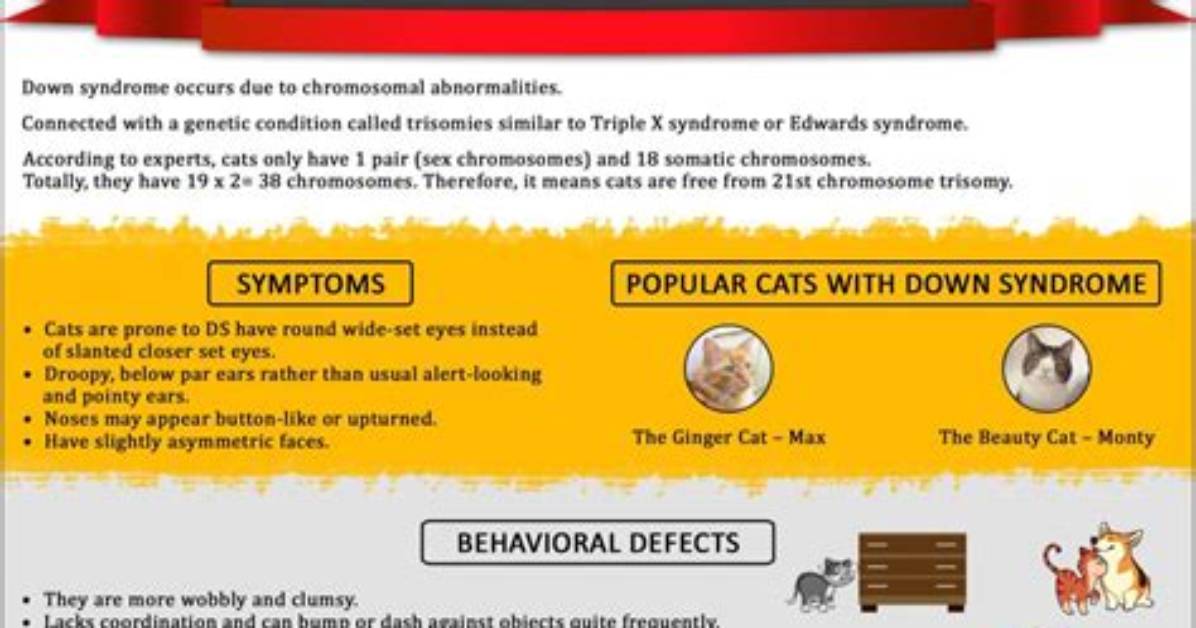
The genetic barrier between species begins with structural karyotyping. Down syndrome in humans results from Trisomy 21, an extra copy of the twenty-first chromosome, which leads to characteristic intellectual and physiological traits. Feline chromosome structure is fundamentally different. Domestic cats possess 38 chromosomes arranged into 19 pairs, classified systematically from Group A through Group F based on size and centromere location.
Human chromosome 21 contains roughly 200 to 300 protein-coding genes. In the feline genome, those corresponding homologous gene sequences do not sit on a single matching autosome. Instead, they are distributed across fragments of feline chromosomes B4, C2, and D3. A full trisomy of any major autosome in felines is almost uniformly fatal in utero, leading to early spontaneous resorption or stillbirth.
A feline counterpart to Trisomy 21 in animals does not exist. The only documented, viable chromosomal abnormalities in cats involve sex chromosomes. The most common is Klinefelter syndrome in felines, characterized by an XXY chromosomal configuration. This condition produces sterile, male calico or tortoiseshell cats, an anomaly occurring in roughly 1 out of every 3,000 calico births, which carries mild physiological markers but bears zero phenotypic relation to human trisomies.
Robert Thorne covers electric vehicle innovations, autonomous driving systems, global mobility trends, and automotive engineering developments.
