Are Prairie Chickens Really Separate Species? New Genomic Findings Shake Avian Biology
 By Sarah Jenkins
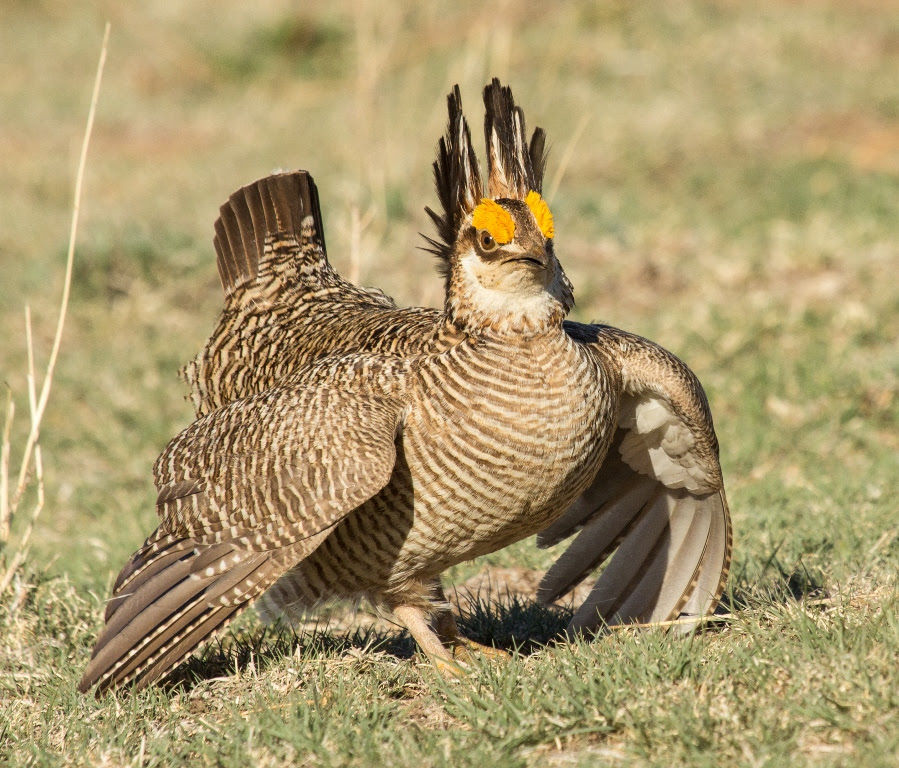
The intersection of shifting taxonomy and federal law creates regulatory chaos. The United States Fish and Wildlife Service (USFWS) has spent decades attempting to manage prairie grouse under the Endangered Species Act (ESA). Agricultural lobbies, oil and gas developers, and wind energy operators have fought every listing tooth and nail, arguing that federal restrictions on rangeland disrupt regional economies across Kansas, Oklahoma, Texas, and New Mexico.
In late February 2026, the USFWS officially followed through on court rulings that invalidated the lesser prairie-chicken’s endangered status across its Southern Distinct Population Segment. The agency cited procedural defects in previous administrative rulings and shifting population assessments. Landowner associations welcomed the cut in regulatory hurdles, but field ornithologists sounded alarms.
Federal law protects distinct taxonomic entities: full species, subspecies, or distinct population segments. If geneticists formally collapse the lesser prairie-chicken into a single species alongside the greater prairie-chicken, anti-conservation lawsuits could argue that the combined taxon is far too abundant across northern states like Nebraska to justify federal restrictions in Texas or New Mexico. Modern biology embraces fluid genetic gradients, but statutory law demands rigid, binary definitions.
Sarah Jenkins is a veteran tech journalist with over 12 years of experience covering artificial intelligence, mobile innovations, and digital ethics. Her insights have appeared in leading technology publications worldwide.
