From David Hyde Pierce to Pop Culture Parodies: the Visual Evolution of the Modern Major General
 By Sophia Al-Mansoor
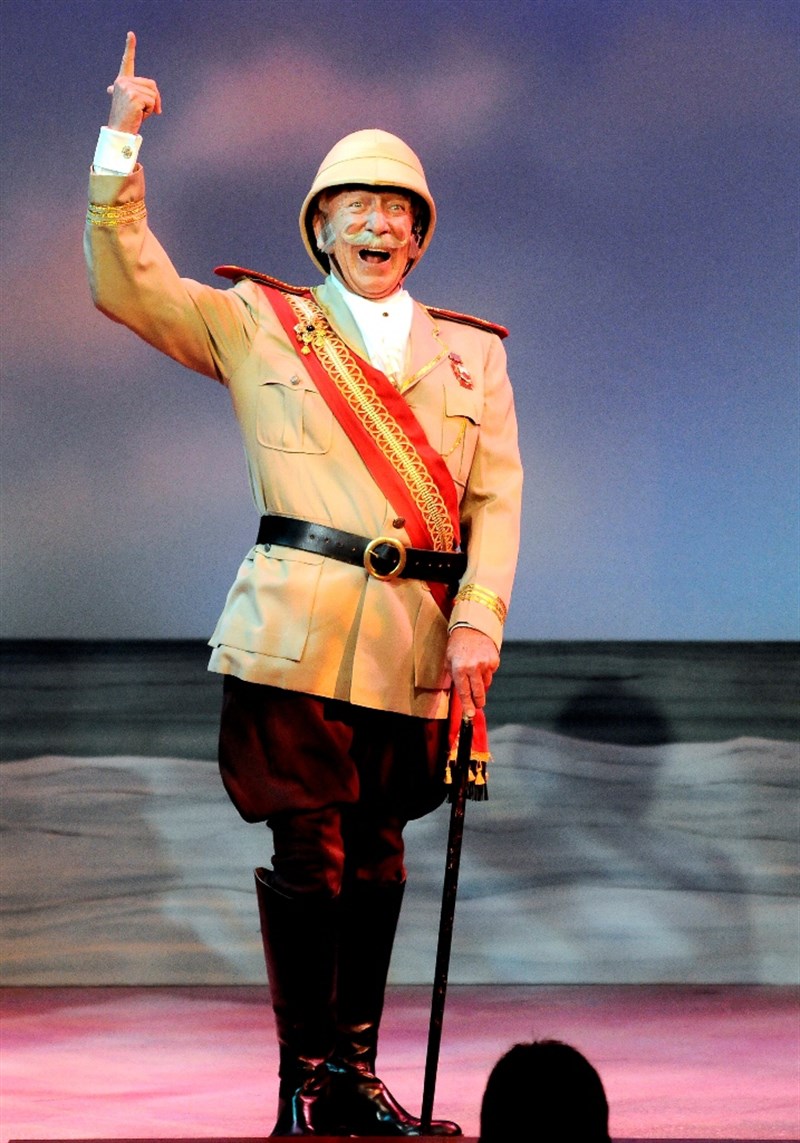
Gilbert was not writing whimsical nonsense for its own sake. In the late 19th century, the British Army was transitioning from the purchase of military commissions, where wealthy aristocrats simply bought officer ranks, toward formal examinations and meritocratic promotion. Sir Garnet Wolseley, an eccentric, highly publicized reformer with vast colonial experience, was the direct inspiration for Stanley. Wolseley was widely hailed as the "very model" of modern military intellect, inspiring the popular Victorian phrase "all Sir Garnet" to mean everything was in order.
Gilbert inverted this reputation. Major-General Stanley enters surrounded by his sheltered daughters, wearing an ostentatious dress uniform laden with campaign medals and braided bullion, only to reveal an education completely detached from military realities. He knows "the kings of England" and quotes "the fights historical / From Marathon to Waterloo, in order categorical," yet admits without hesitation that he cannot tell a rifle from a javelin.
Arthur Sullivan matched Gilbert’s barbed libretto with an orchestra that mimics formal military fanfares before settling into an unrelenting, clockwork accompaniment. The music never provides Stanley a rest measure. It strips away all vocal embellishment, forcing the actor to rely solely on percussive consonant articulation. The performance becomes a high-wire psychological unraveling disguised as aristocratic self-congratulation.
Sophia analyzes international trade, startup ecosystems, retail transformation, and supply chain logistics for modern digital publications.
