Is 'Vato' Actually Offensive? the Hidden Truth Behind the Chicano Slang Sparking Controversy
 By Chloe Bennett
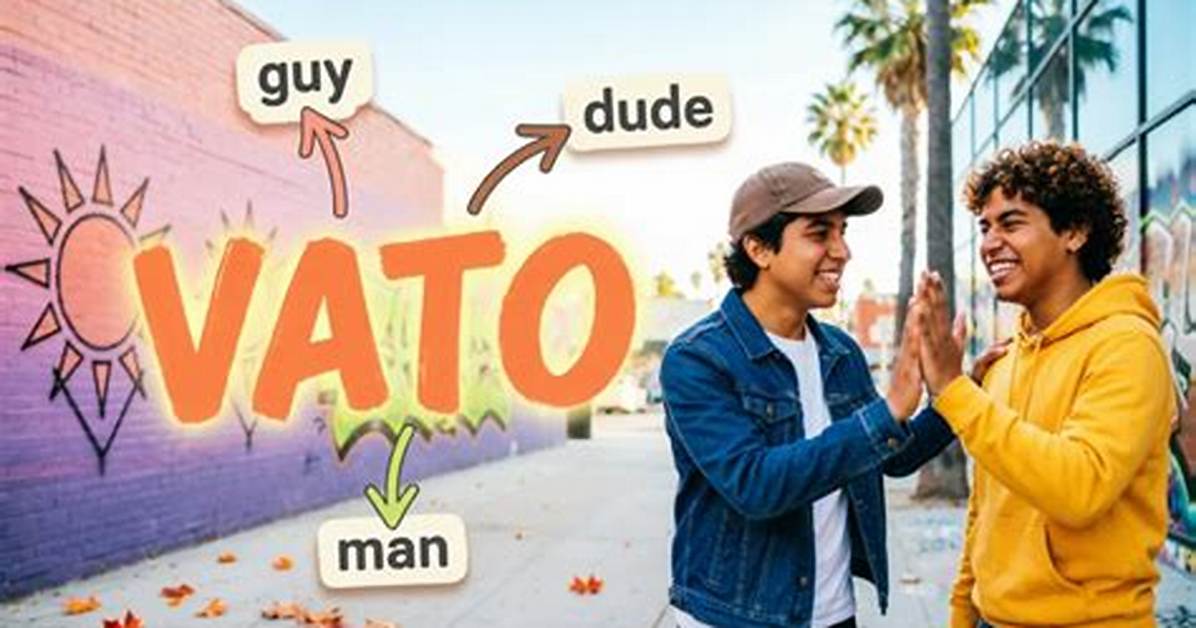
In strict semantic terms, vato is not an ethnic slur. It carries no inherent hatred, nor does it demean someone's ancestry, race, or dignity when used in neutral conversation. An East Los Angeles mechanic greeting his coworker with “¿Qué onda, vato?” is doing nothing more scandalous than an Australian saying “How's it going, mate?” or a Brooklynite asking “What’s up, bro?”
The confusion for monolingual English speakers stems from contextual volatility. Spanish slang is intensely relational. Intonation and familiarity dictate everything:
- “Ese vato es a toda madre.” ("That guy is awesome.") In this setting, the word denotes warmth and community standing.
- “¿Qué traes, vato?” ("What’s your problem, man?") Paired with a combative stance, the word shifts from friendly banter to an explicit challenge.
- The "Vato Loco" Construction: Adding loco (crazy) alters the subtext entirely. Popularized by 1990s films, vato loco refers specifically to a reckless gang member or street-hardened individual. When outsiders hear vato, they frequently assume this gang-affiliated connotation, misinterpreting broad working-class street Spanish as criminal jargon.
Tone governs the term. If spoken with sneering condescension by someone outside the culture, it lands as an ugly microaggression. Spoken around a family barbecue, it is merely comfortable shorthand.
Chloe Bennett explores the intersection of pop culture, streaming entertainment, digital trends, and contemporary lifestyle. Her weekly commentary reaches thousands of culture enthusiasts.
