Agrivoltaics in Action: Visual Proof That Solar Fields Are the New Agriculture
 By Marcus Vance
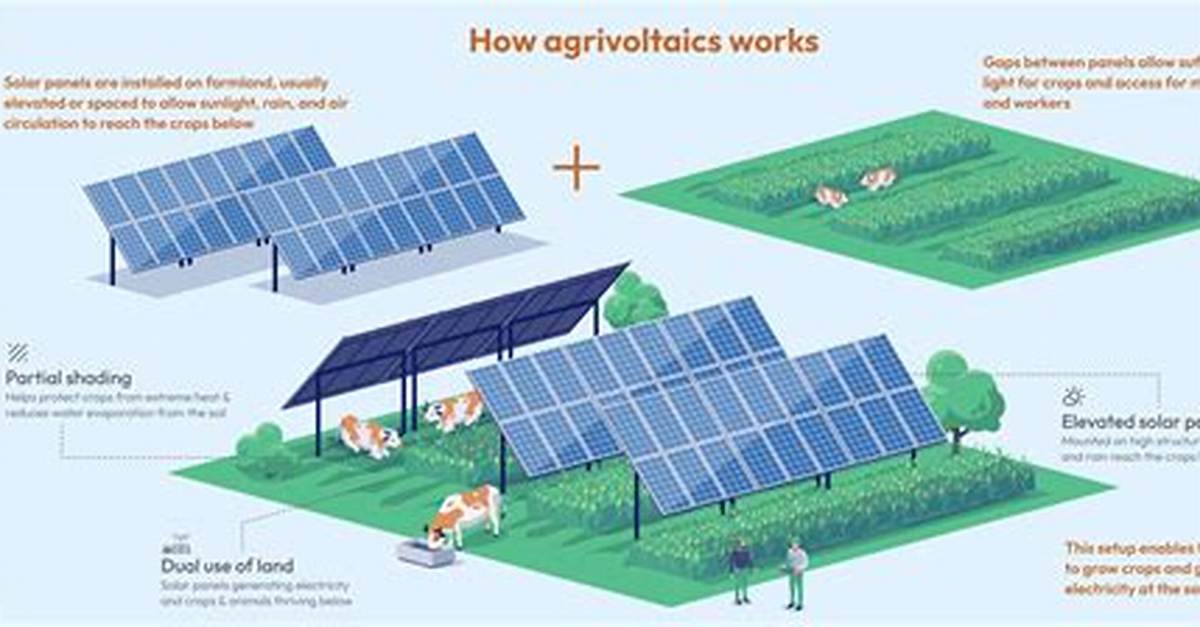
Climate volatility is reshaping the financial calculations of sustainable farming practices. In arid farming belts, soil moisture depletion threatens small-scale operators running single-digit profit margins. Beneath a solar canopy, localized evapotranspiration drops sharply.
As crops release moisture, the vapor remains trapped beneath the panels, keeping ambient temperatures up to 9°F cooler than exposed fields during midday summer peaks. This localized cooling loop yields a secondary technical benefit: solar cells operate more efficiently. Standard silicon modules lose power generation capacity as surface temperatures exceed 77°F. The cool microclimate generated by active under-canopy cultivation reduces panel heat, capturing additional megawatt-hours during hot months.
For multi-generational operations, introducing predictable solar royalties shields growers from volatile wholesale commodity pricing. Instead of selling land outright to suburban housing subdivisions or clear-cut utility developments, farmers secure long-term, indexed cash flows. Energy production stabilizes farm economics while food production continues on the same ground.
Marcus Vance is a cybersecurity auditor and technology writer dedicated to educating the public about online safety, data privacy regulations, enterprise security, and emerging cyber threats.
